
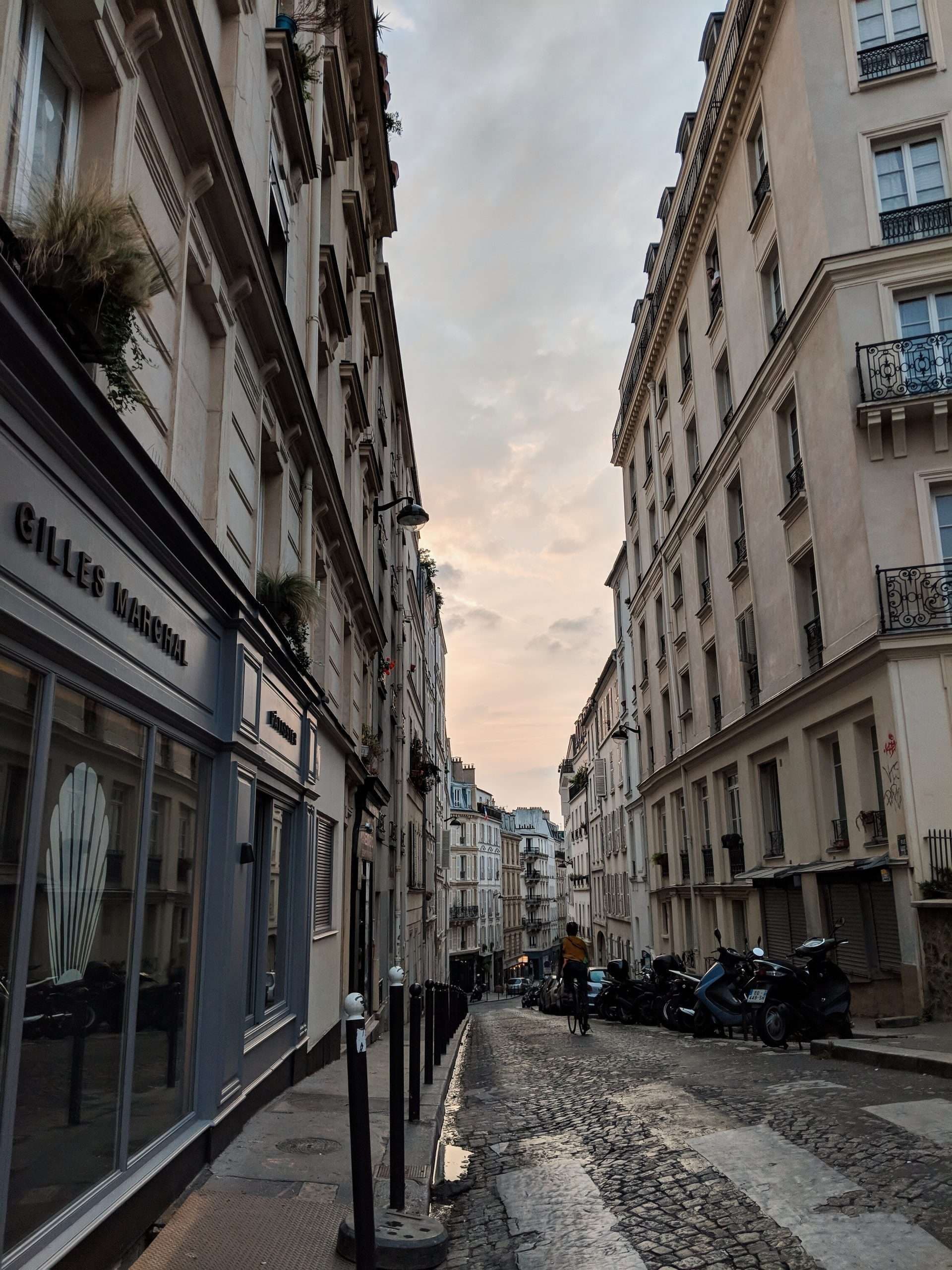
Paris, the city of all cities. Cafes and restaurants on every street corner, unparalleled shopping and an unbeatable charm ensures that Paris lives up to the hype.
The French capital rewards slow travel: pick a neighbourhood, settle into a café terrace and let the city come to you. Each arrondissement has its own character, from the village feel of Montmartre to the buzzy, bohemian streets of Pigalle at the foot of the hill. Our Paris guides focus on the neighbourhoods we know best, with the restaurants, cafés and corners worth seeking out.
Why we love Paris
Paris is the city we keep going back to, and the one we've learned to enjoy at a slower pace with kids in tow. We used to race through the famous sights and come home exhausted. Now we'd rather spend a whole afternoon in one neighbourhood, eating well and watching the street go by. That's the version of Paris we love, and the one we try to share here.
What to see and do
The big landmarks are worth seeing once, but the real pleasure of Paris is in the walking. Give each area its own morning or afternoon rather than cramming.
- The Louvre and the Tuileries gardens right beside it, easy to pair on the same day.
- Montmartre and the Sacré-Cœur, climbing the hill for the view and the village feel behind it.
- The Seine, whether by stroll along the banks or a boat at dusk.
- Notre-Dame and the Île de la Cité at the historic heart of the city.
- The Musée d'Orsay, housed in a former railway station and full of Impressionists.
- Pigalle, the bohemian quarter we cover in our quick guide to Pigalle.
Where to eat and drink
Food is the reason many people come to Paris, and it rarely disappoints. The city runs on boulangeries, bistros, wine bars and cafés that stay open all day for a coffee or a glass. Our advice is to eat where the neighbourhood eats rather than on the main tourist streets, and to never skip the bread. For a taste of the area we know best, our Pigalle guide points to the spots we return to.
When to go and how to get around
Spring and early autumn are lovely, with mild weather and terraces in full use, while summer is warm and busy and August thins out as locals leave town. Winter is cold but atmospheric and far quieter. Getting around is simple. The Métro reaches everywhere and runs late, and most of the best parts of the city are best seen on foot anyway.