Throughout our years in Ireland, we’ve had the opportunity to visit many parts of the country. Driving through the Emerald Isle never fails to stun you with its views around every corner. Lush green hills, rolling farmland, narrow roads, and rugged coastlines. Road tripping in Ireland is something every visitor to the island, or indeed just everyone, should tick off their bucket list.
First, how to plan the perfect road trip?
Renting a car in Ireland
Renting a car is a great way to get around and explore the country. It gives you the freedom to drive to the routes you prefer and at your own pace. We’ve completed several road trips as well as participated in a few guided bus tours here and we would without hesitation recommend renting a car and avoid the crowded buses.
We have often compared rentals through Auto Europe, then checked the same car and terms with the rental company directly. A broker is one option, but the cheapest headline price may not be the cheapest total. Compare the deposit, excess, driver fees, fuel policy and what happens if you need to make a claim. Ireland's Competition and Consumer Protection Commission explains that cover bought from a separate insurer can work differently from the rental company's cover: the rental company may charge the excess first and you then seek reimbursement. Read both policies before choosing.
We have rented through Sixt, Enterprise, Hertz and Thrifty at different times. Availability and total price vary by pick-up point and date. If you are new to driving on the left, compare the cost of an automatic car as well as the vehicle size you need.
Rental car with an automatic transmission
In Europe the majority of rental cars have a manual transmission. One of the trickiest things about driving on the left side of the road is that everything is opposite of what you’re used to. That means using your left hand to change gears. Even if you’re used to driving with a manual transmission in your home country, then do get a car with an automatic transmission. Not having to shift gears (using a new hand) greatly improves your attention span.
What is the most comfortable car for road trips?
We’ve rented everything from a Mini Cooper to a mid-size SUV. A larger car gives a family more luggage room, but a compact car is easier on narrow roads and in small car parks. We liked the space in a Nissan Qashqai-sized car on longer trips. For day trips out of Dublin, a smaller car can be enough. Check the actual transmission and child-seat capacity on the booking, rather than assuming the desk will have a free upgrade.
Is it difficult to drive on the ‘wrong side’ of the road?
Driving in Ireland means driving on the left. It’s actually surprisingly easy driving on the ‘wrong side’. That said, driving on the opposite side than drivers are used to requires more concentration. Make sure to take it easy and do a slow practice run to get familiar with the roads and the car you’re driving. It’s pretty easy as long as you just follow traffic but be mindful of roundabouts or when turning onto a street.
Tip: The roads are narrow and the Irish drive fast. Some are so narrow that only one car can pass. So be prepared to practice your backing skills on a narrow coastal road with large tourist busses waiting to pass by.
What are the most beautiful parts of Ireland?
Ireland has some of the most unforgettable and dramatic landscapes. There is plenty to see. The hugely popular Wild Atlantic Way takes in a dizzying 2500 km coastal route spanning six diverse Irish regions from Cork to Donegal. While the Wild Atlantic Way offers some of the most beautiful scenery it’s also a route that takes up to three weeks behind the wheels. Most people therefore focus on either going North of Galway through Connemara and possibly all the way to Donegal (highly recommended) or head south to see Cliffs of Moher, Isle of Dingle and not least drive the famous Ring of Kerry.
So not to worry, you don’t need to commit to three weeks for spectacular views here.
Here’s our suggestions to some of the best Irish scenery. There are so many beautiful routes, scenes, and sights, and the list is by no means exhaustive.
Wicklow Mountains
Kilafin, Laragh, via Bray, Co. Wicklow, website
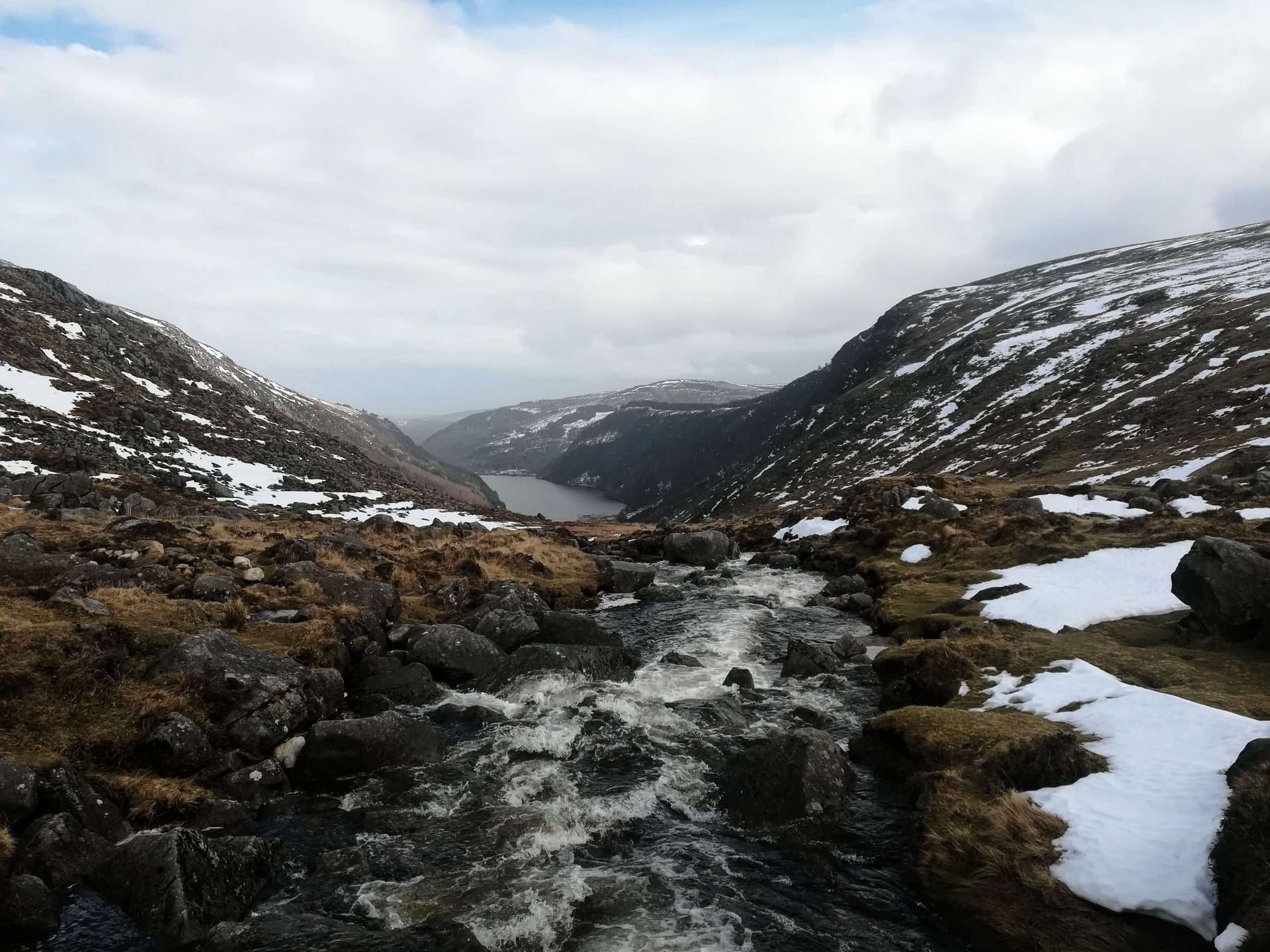
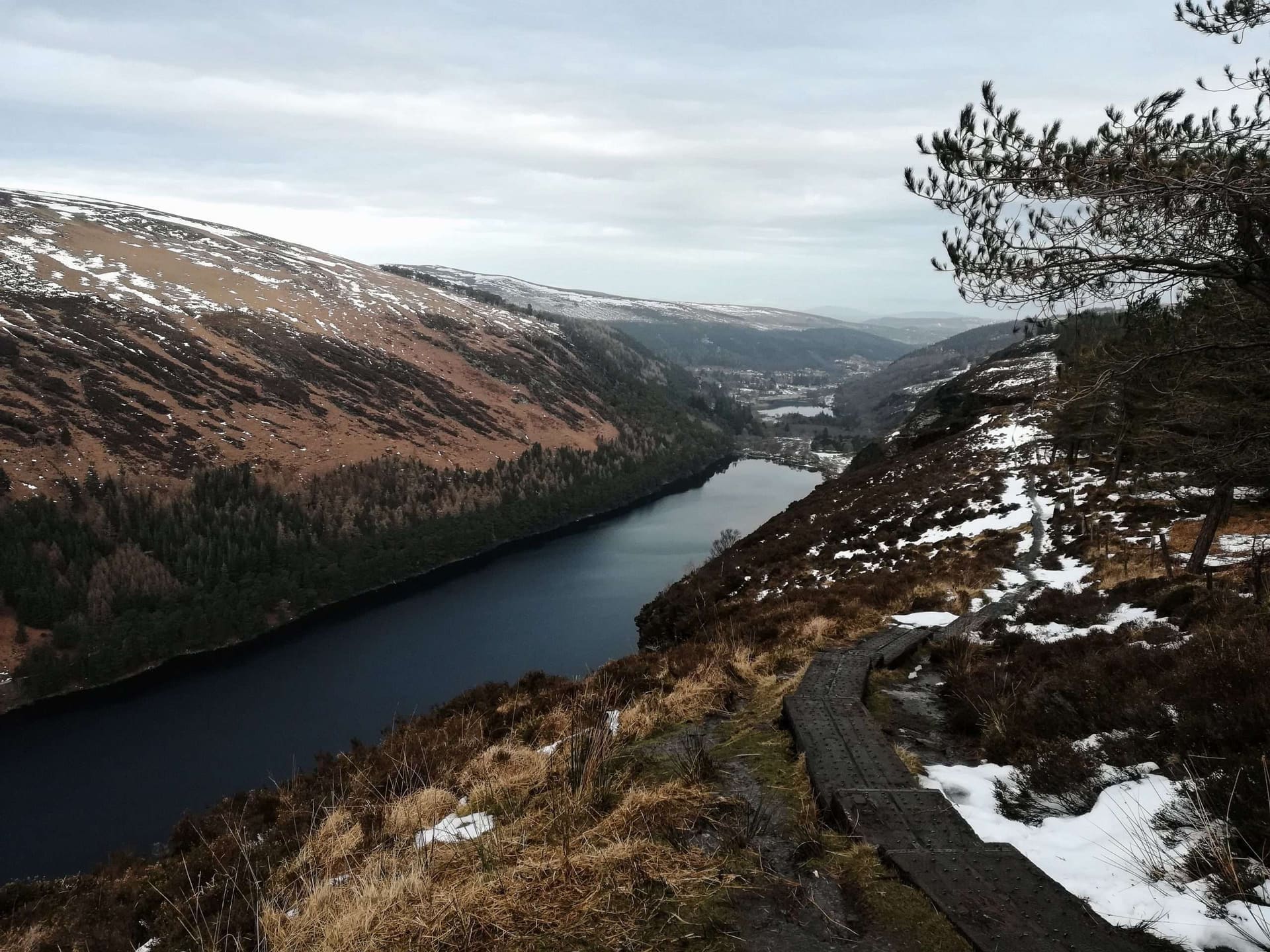
Situated just south of Dublin Wicklow Mountains is the largest of Ireland’s six National Parks and cover more than 20,000 hectares. The national park offers beautiful trails and big views. Wicklow Mountains is a perfect day trip from Dublin but leave early in the morning to make sure you have time to do the whole trek.
If you have more time, visit (or stay at) Powerscourt House and Gardens (and waterfall) or one of the quaint seaside towns of Bray, Greystones and Dun Laoghaire.
Find hotels near Wicklow Mountains here
Connemara National Park
Letterfrack, Co. Galway website
Just North of Galway in the west of the country lies Connemara National Park. The park is a favorite of ours due to its beauty and low amount of visitors. You have nearly 3,000 hectares of land almost to yourself in this sometimes overlooked pearl. There are a wealth of walking trails, a variety of landscapes and spectacular views.
Find hotels near Connemara National Park here
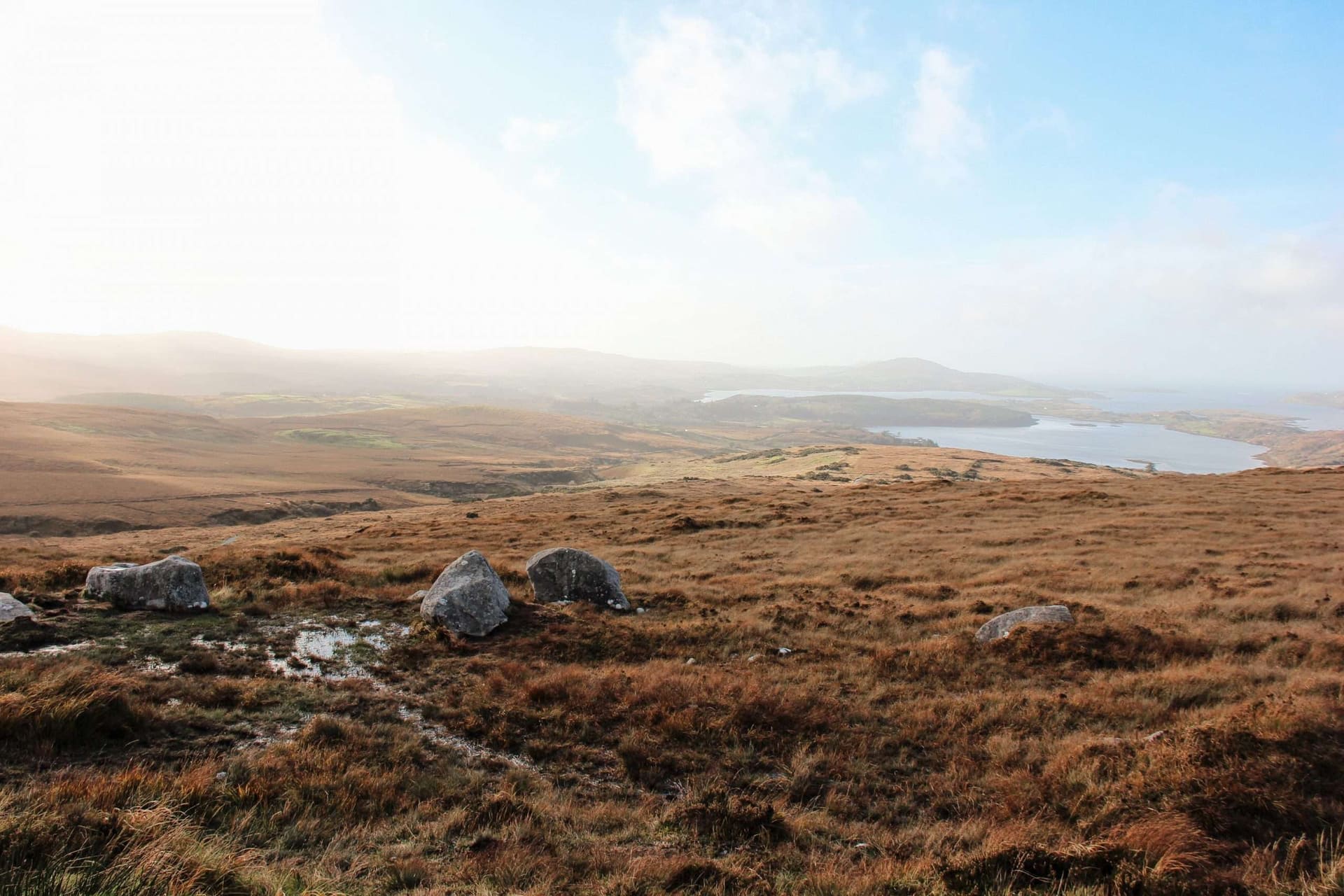
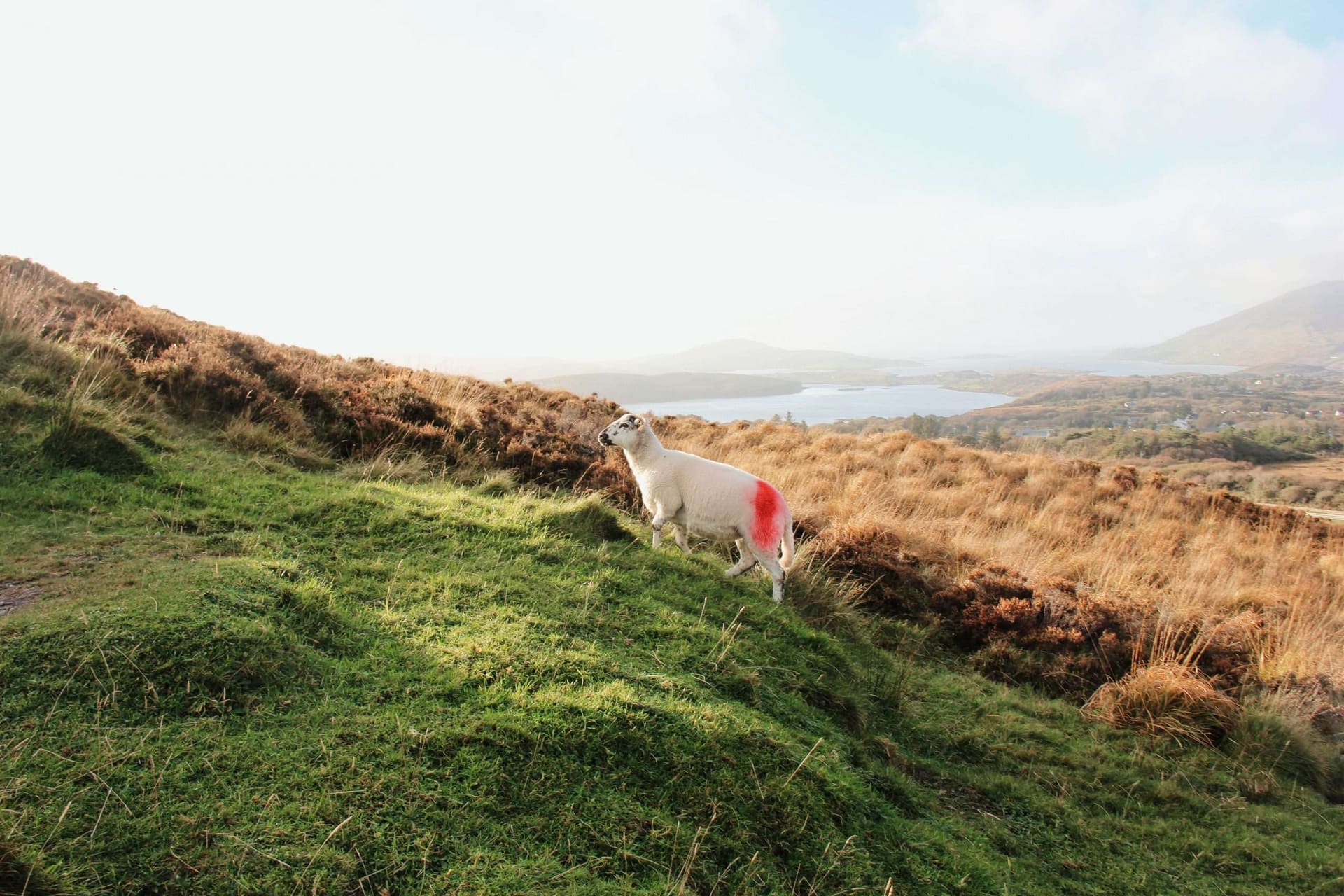
Ring of Kerry
Ring of Kerry is one of Ireland’s most popular iconic drives and measures 179 (111 miles) around the Iveragh Peninsula in County Kerry. A drive along the Ring offers stunning and majestic landscapes.
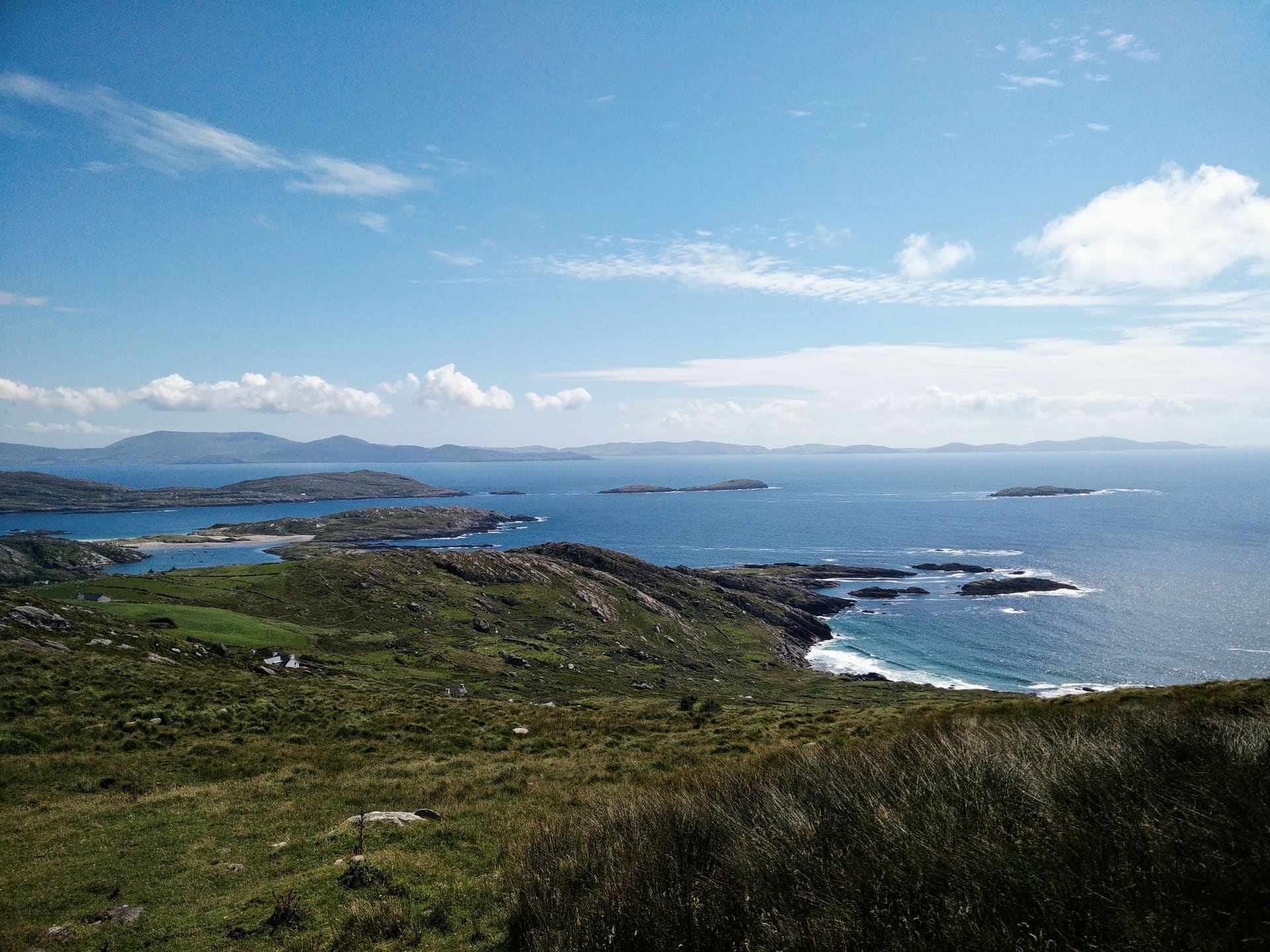
View of the Atlantic Ocean from the Ring of Kerry in Ireland
Part of the Wild Atlantic Way, the Iveragh Peninsula is the crown jewel of southwest Ireland. Do prepare yourself for sharing the drive and sights with convoys of tourist buses. By driving yourself you can avoid the most crowded lookout posts, and it’s beautiful everywhere!
Find hotels along the Ring of Kerry here
Cliffs of Moher
Liscannor, Co. Clare, website
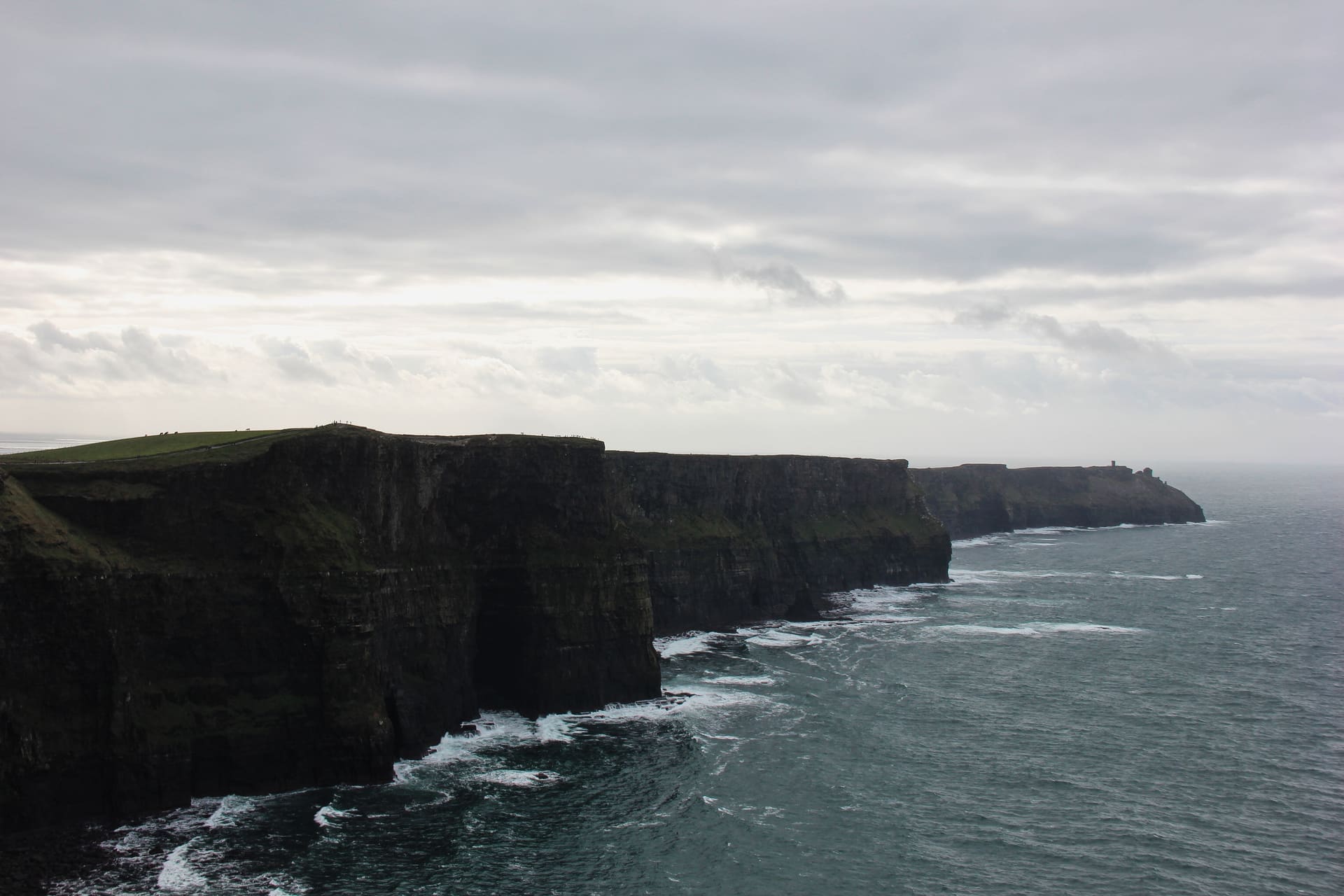
Cliffs of Moher in County Clare might be the most famous tourist spot in Ireland (save the Guinness Brewery). And rightly so. The iconic cliffs stretch for almost 8 kilometers (5 miles) along the Atlantic coast and stand 214 meters (702 feet) tall at their highest point. As they are one of the most visited tourist sights in the country do prepare for large crowds and lines of tour busses. Unlike many other parks and sights around the country where it is possible to go off road, at Cliffs of Moher it’s nearly impossible to escape the crowds. The spectacular and highly instagrammable views are worth it though.
Find hotels near Cliffs of Moher here
Consider staying in Galway and enjoy perhaps the country’s most charming city (75 km / 45 miles from Cliff of Moher).
Stairways to heaven
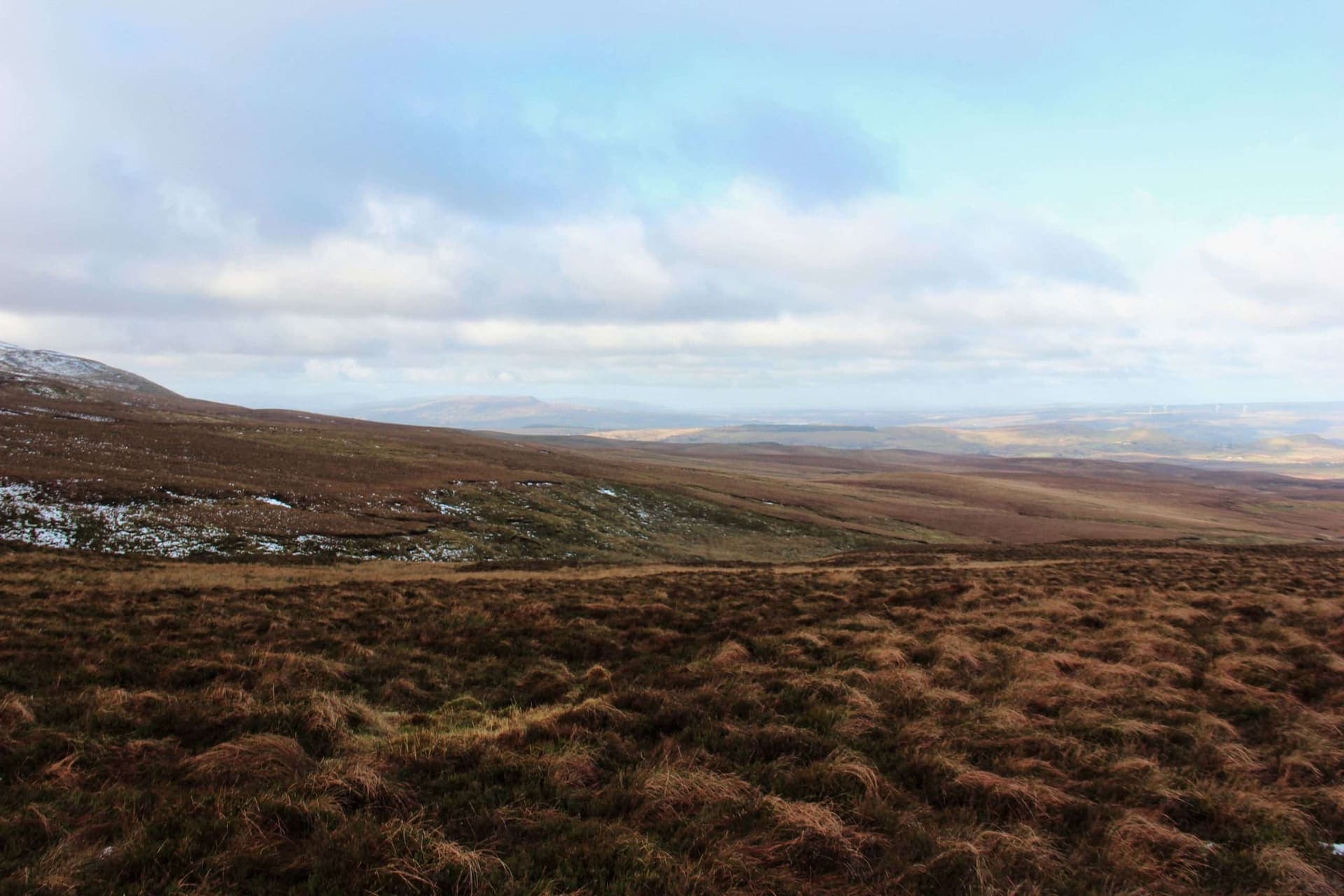
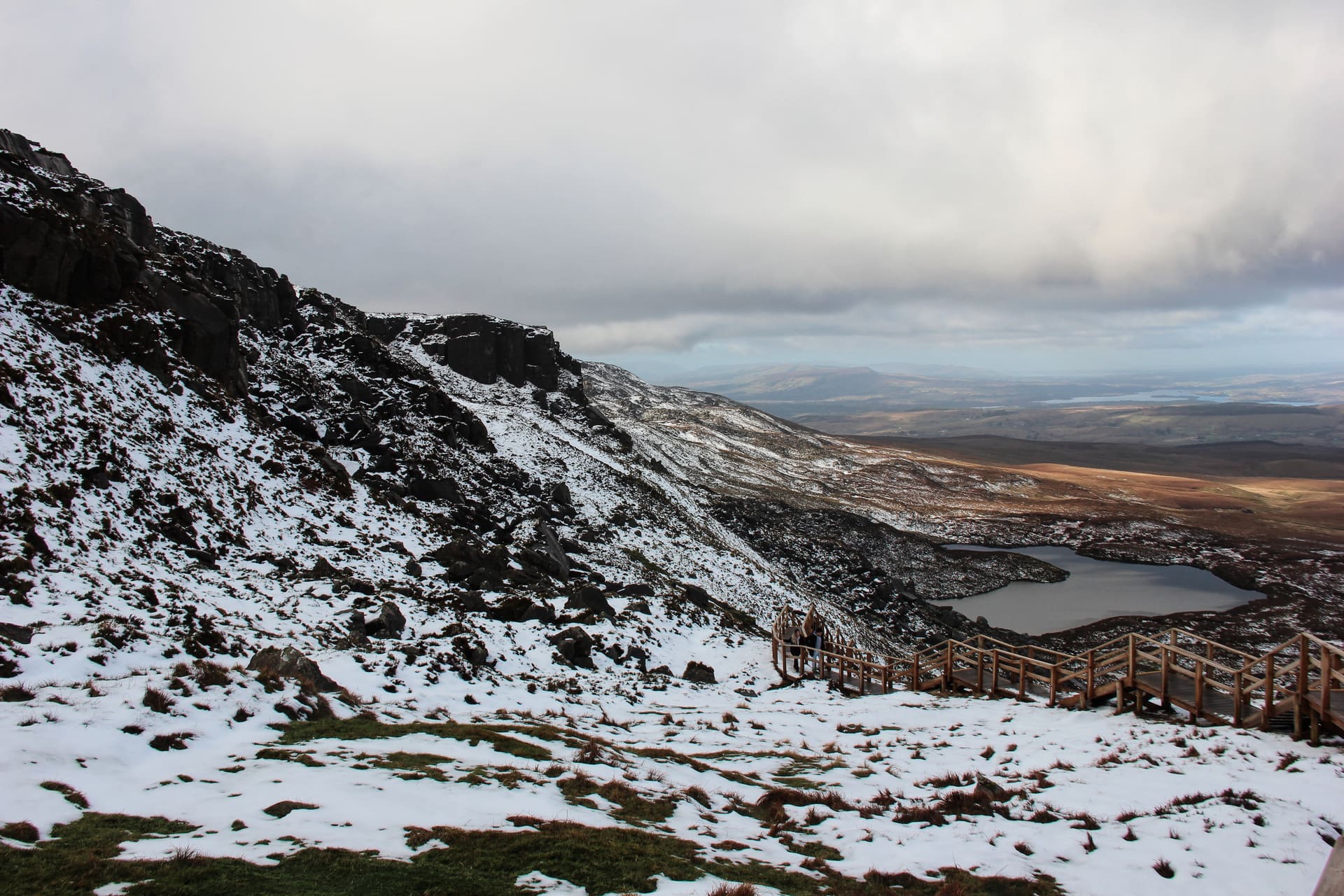
The Stairways are found at the Cuilcagh Mountain in County Fermanagh. The wooden walkway opened in 2015 to protect the blanket bog and restore damaged peatland. Dubbed the Stairway to Heaven because of the views along the Legnabrocky trail, the walkway quickly rose to fame through social media and now draws more than 24.000 visitors a year. We would definitely recommend going early in the day or even better off-season to beat the large crowds. It’ll be just as beautiful all year and going in winter (like we did) you’ll get to experience the snow-covered peak.
Find hotels near Cuilcagh Mountain here
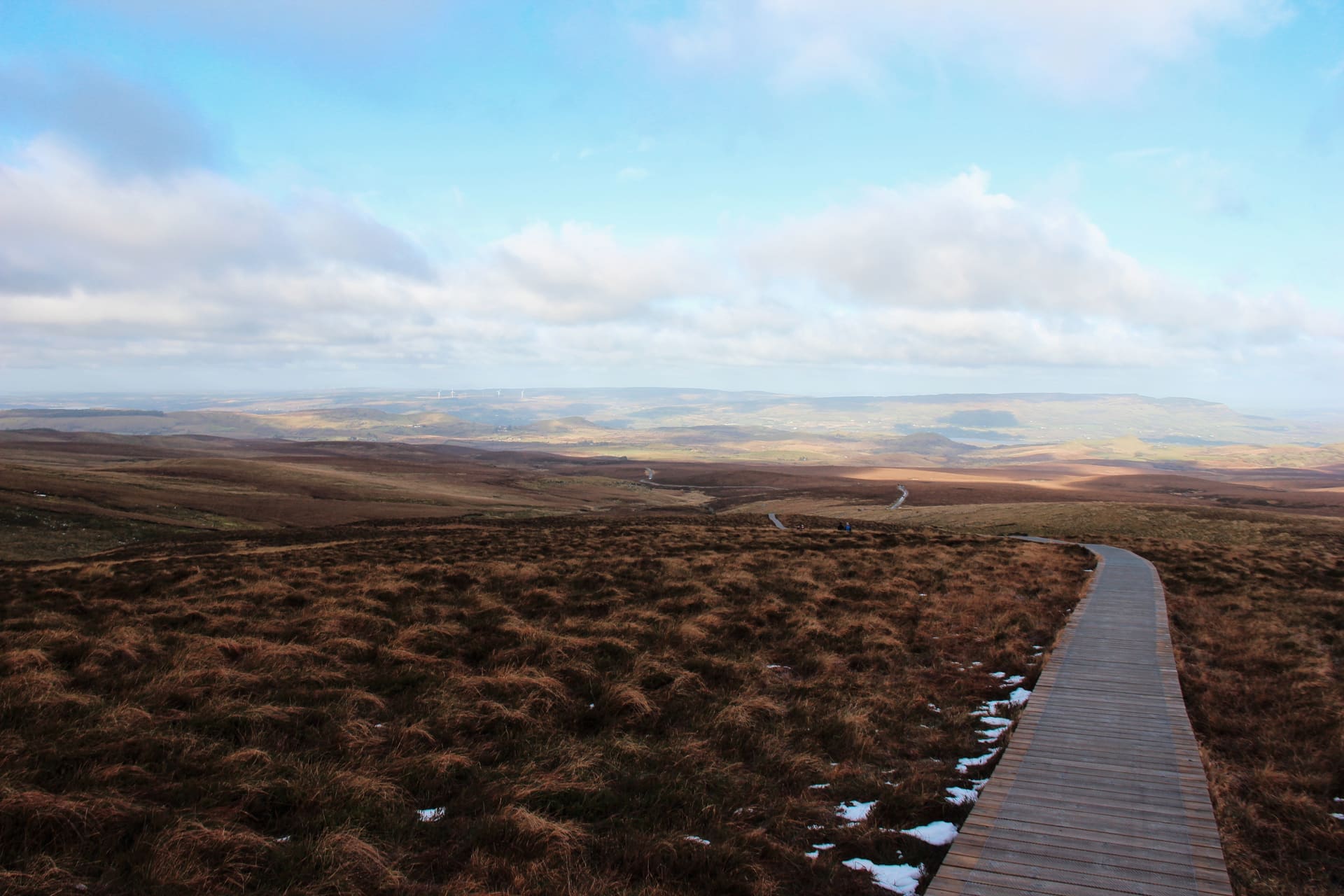
It’s a bit of a walk to get to the stairways to heaven but definitely worth it.
Giant’s Causeway
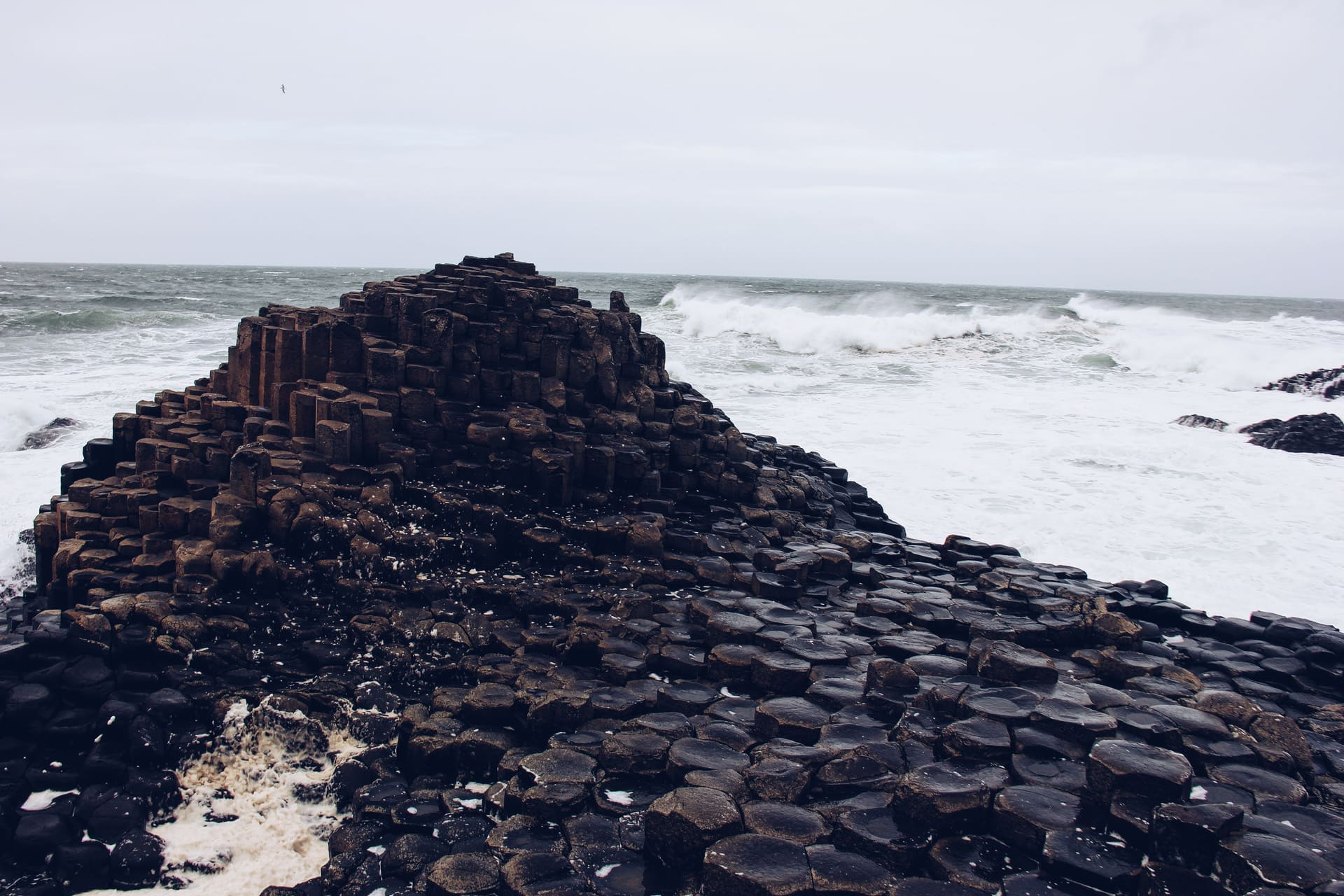
The Giant’s Causeway is a beautiful hour’s drive North of Belfast and a perfect day-trip if visiting the Northern Capital. It was designated a UNESCO World Heritage site in 1986 and is Northern Ireland’s only UNESCO Heritage Site. It’s called the Giant’s Causeway because according to legend, the Irish giant Finn MacCool built the causeway as a crossing to Scotland.
It is undoubtedly one of the great natural wonders of the world. Scientists (disagreeing with folklore) say the striking landscape was caused by volcanic activity more than 60 million years ago and is made up of more than 40,000 hexagonal-shaped pillars.
Find hotels near Giant’s Causeway here
See also our city guide to Belfast
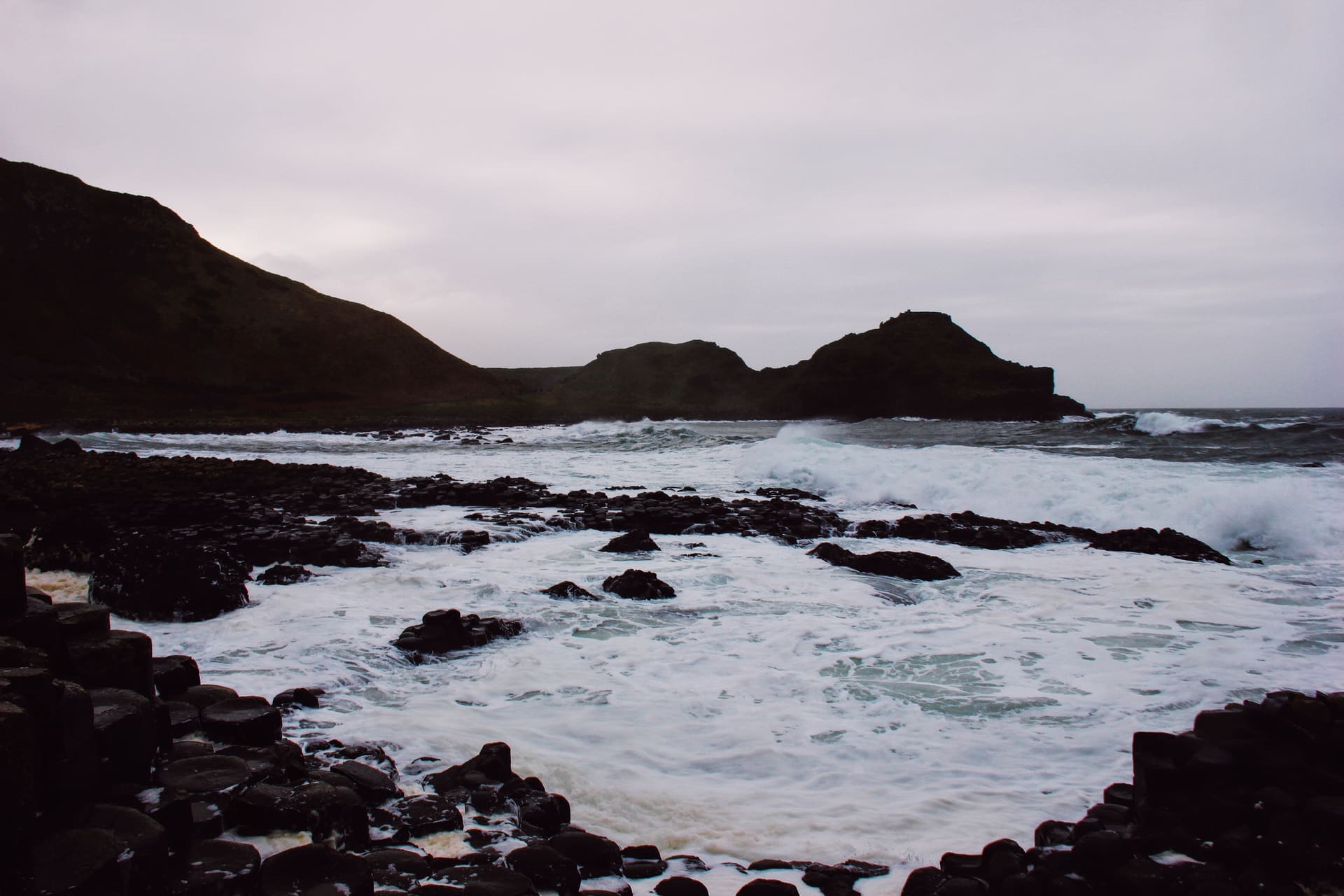
Striking landscape at Giant’s Causeway